Beyond the Automatic Yes: Reclaiming Personal Belonging

On Creative Care & Returning to Yourself
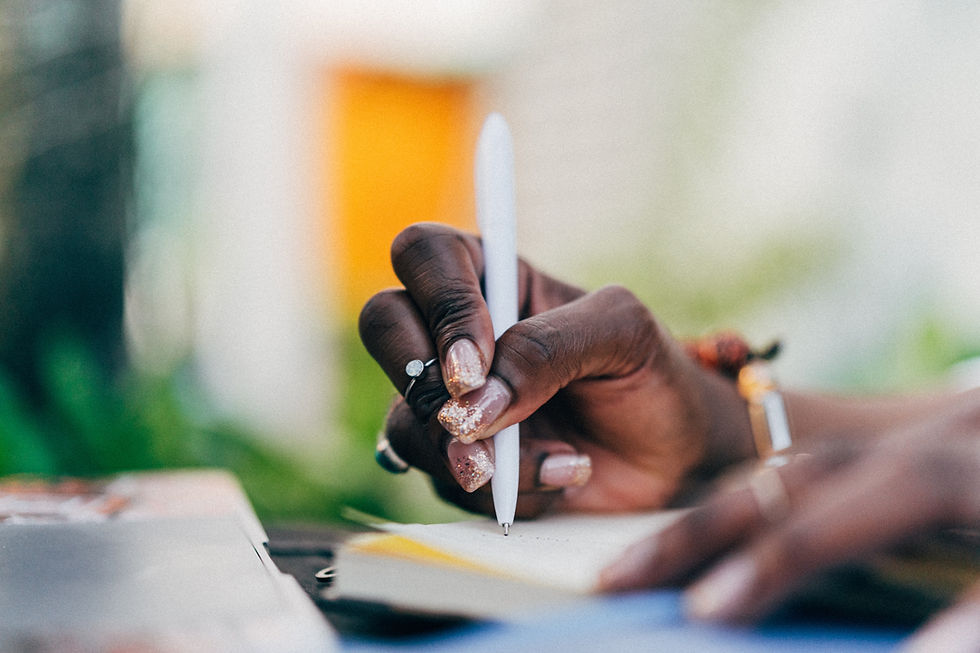
In the last article, I wrote about elemental belonging - the relationship to the body, physical space we inhabit, and our individual possessions. And, by birth we are endowed with autonomy of conscience, thought, and emotion. We are creative beings that deserve and need to know our own hearts and minds. This is the domain of personal belonging.
Particularly over the summer, I started paying closer attention to my own elemental belonging. I know how to listen and respond to more cues from my body like when it is time to get a drink of water, get ready for bed, or declutter a pile on my desk. I can give myself this kind of relief with a lot more ease now. However, my challenges with personal belonging have significant implications for my elemental self.
If elemental belonging is physical, material, and visible, we can consider personal belonging as intellectual, emotional, and conscientious. These are interrelated ways of belonging to one’s self and others - all parts of the system that is our unique and collective aliveness.
I recognized I had a problem with personal belonging when I kept tripping while walking on the stairs in my house. Our attention spans have been hijacked by social media and algorithms, the tiny computer that is not our brain but is so close all the time. The phone travels with us in our pockets or hands from place to place. I work from home. When I am leaving my office on the second floor to refill my water bottle in the kitchen on the first floor, more often than not I bring my phone downstairs with me.
On average, in the United States, people check their phones nearly 200 times a day. So of course while pouring the water, I check my email or LinkedIn for updates. My mental capacity gets sucked into whatever poured into my mind from my phone.
As I go back upstairs, I am reading something on my phone. I miss that I’ve arrived at a turn in the staircase and stub my toe because I’m not looking where I am going. To save my toes and my neck from falling down the stairs, now I am trying to practice not looking at my phone while I walk up and down the stairs. Does this sound as ridiculous to you as it does to me?
The slow surrender of personal belonging - even the mental capacity to walk safely up and down the stairs - is so mundane and innocuous. The hijacking has resulted in an immense difficulty to discipline ourselves away from the technology and constantly accessible feel good hormone hits.
While we may blame the corporations and oppressive systems for stealing from us, personal belonging escapes from us in more unintentional ways by consent.
We are responsible for and asked to respond to work emails, volunteer for the school fieldtrip, call a friend who needs a shoulder to cry on, plan a celebration for a parent, and on and on the list of what we give grows. At some point, we give automatically. Someone asks, we check the calendar, if nothing is there, we just say yes. For lots of us, the if/then, pros/cons, scenario planning, and visioning tools we leverage for workplace decision and strategy making rarely apply to other parts of our lives.
Do you remember how you belonged to yourself as a child? Were there snippets of imagination you could steal away from school, chores, a car ride with your parents taking you someplace you didn’t want to go? As a little girl, personal belonging was deeply imaginary and creative for me.
I could spend hours singing along with Whitney Houston into my hairbrush. My father was a songwriter and I discovered that I liked writing too. I wrote songs and poems well into college. I took a lot of dance and sociology classes in college. The world was mine to explore.
Things shifted, however, when I became a mother at nineteen years of age. My daughter required an emotional, mental, and consciousness capacity from me that I only knew how to give her by not giving in to my own need for creativity, personal reflection, and curiosity. I did what I needed to keep us housed and fed while I gave my situational best to attain my undergraduate degree. I learned to forsake my belonging to myself in critical ways as a matter of survival and the possibility to thrive in the future.
When did things shift for you?
That baby is now almost thirty years old and has babies of her own. I have a 12 year old at home along with leadership responsibilities in paid work, family and volunteering capacities. It has been a slow process learning how to stop automatically giving myself over to unintended priorities. But I am making progress!
For over twenty years, survival and caretaking set the agenda. It wasn't until five years ago, through the curation of the Black Women at Home (BW@H) Project, that I finally reclaimed a vehicle for my own curiosity. Being a culture worker is a different vehicle of creative expression than what I was used to in my younger years - singing, dancing, and writing poetry. However, the creation of an archive that visibilizes the ways in which Black women embody, make meaning of, and celebrate home has offered me a return to my curiosity too.
But I've had to fight to claim and sustain capacity and resources to allow BW@H to exist.
I only permitted the seed of the project to be actualized after stepping away from being an executive director of a nonprofit. I claimed that opportunity when I wasn't sure what my next professional step was going to be, but I was able to have some space to listen to my conscience and imagine this project.
Fighting to hold on to this creative outlet is part of the practice of my personal belonging. After two years of effort, I stepped away from it for over a year as I grieved the loss of my father and my brother in 2024 and most of 2025. Honoring that pause was its own act of personal belonging. Choosing to return to the work when I was ready was another.
By the fall of 2025, however, I learned that I could pick the project back up from where I had left it. I just had to keep finding a way to choose myself.
That choice isn’t just on a whim or waiting for a spark. Structurally, the choice was made by dedicating Mondays to my own work. If you’ve ever managed to put a meeting on my calendar for a Monday, you likely experienced me not showing up without a text reminder. I’m so accustomed now to having a day of personal belonging that even if something is on my calendar for a Monday, I don’t show up because I don’t check my calendar!
Our thoughts, emotions, and creative spirit belong to us by birthright. We have the right to explore and mine them for ourselves as a priority. The extractive economy does not have to win all of the time! I am very fortunate to have the kind of autonomy with my time to take a day to myself. Even when that autonomy is challenged though, I look for other ways to belong to myself.
For example, a part of personal belonging is reclaiming rest and breaks. Back in April, I looked at my calendar and blocked out beach days in August. A friend of mine introduced me to this idea by looking at the calendar for the year and giving myself something to look forward to by planning vacation dates well in advance.
This was an act of personal belonging that used structure and agency not as a tool for extraction, but as a guaranteed container for my own joy and pleasure.
An Invitation! A Practice for Personal Belonging


Comments